Most sourcing problems that surface late - a missed season, a margin that evaporated, a batch that failed inspection - were decided at the quotation stage, long before anyone cut wood. The questions in this FAQ are the ones that determine whether a wooden product programme runs smoothly, and they are best answered before the first sample is approved rather than after the PO is issued.
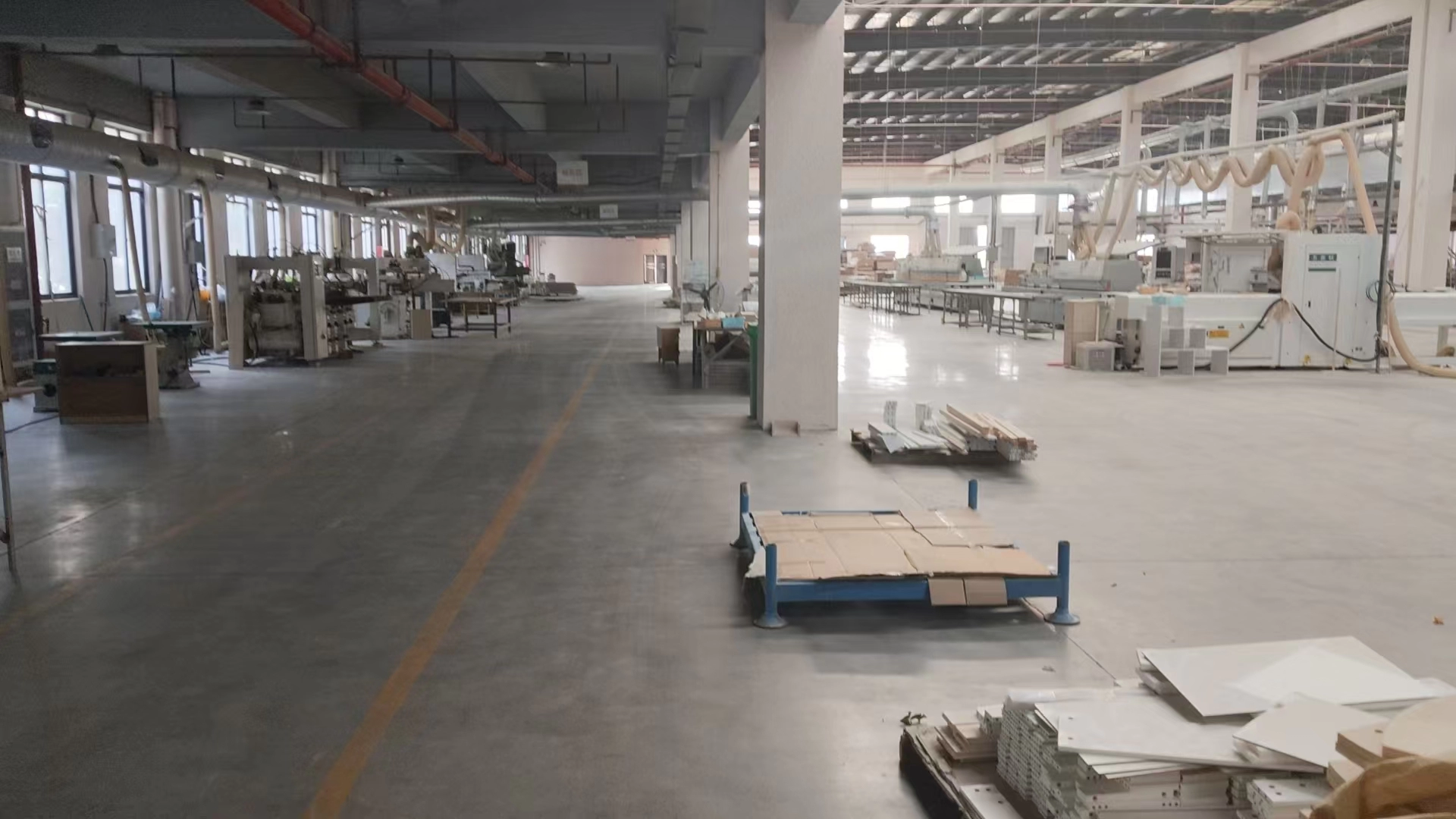
About us: Yunhe Tuoxin Industrial Co., Ltd. manufactures custom wooden mirrors, wooden toys, small wooden furnishings and handicrafts from Yunhe, Zhejiang, with a second facility, Caoxian Tuoxun Industrial Co., Ltd., in Shandong. We run OEM and ODM programmes and ship to the USA, UK, Germany, Australia, Japan and the Middle East.
In this article
- What should I include when requesting a quotation?
- How is MOQ calculated, and why does it vary?
- What does the sampling process look like?
- Do I pay for samples, and is it refundable?
- What lead times should I plan for?
- When do moulds, jigs and tooling get made?
- What payment terms are normal?
- Which Incoterms should I choose?
- What if I need to change the order after confirming?
1. What should I include when requesting a quotation?
A quotation is only as accurate as the brief behind it. When a buyer sends three lines and asks for a price, the supplier has to guess at every variable that drives cost, and the price that comes back is either padded for safety or optimistic and revised later. Both outcomes waste time.
| Information | Why the supplier needs it | Effect on price |
|---|---|---|
| Product description or drawing | Determines construction method, number of components and assembly steps | High - a two-piece and a six-piece product differ substantially |
| Dimensions and tolerances | Drives timber volume, cutting waste and machining time | High |
| Wood species | Species differ in cost, hardness, availability and finish behaviour | High |
| Surface finish | Raw, stained, painted, lacquered, oiled each add different process steps | Medium to high |
| Colours and artwork | Number of colours drives painting passes and per-colour compliance testing | Medium |
| Packaging requirement | Brown carton, printed colour box, polybag, hangtag, insert | Low to medium, but affects unit and carton cost |
| Target quantity | Sets the production run length and the amortisation of setup | High - the single biggest variable |
| Destination market and port | Determines testing obligations and freight terms | Medium through compliance and logistics |
| Target price or target market | Lets the supplier propose a construction that meets it | Medium |
Minimum brief that gets a useful answer: drawing or reference photo, dimensions, wood species (or "open to recommendation"), finish, target quantity, destination country, and required delivery window. With those six items most factories can quote meaningfully in a few days.
2. How is MOQ calculated, and why does it vary?
MOQ is not an arbitrary number a factory picks to make life difficult. It is the quantity at which the setup work, material buying and quality control effort stop being disproportionate to the order. It rises and falls with four cost drivers.
| Cost driver | What it means | Raises MOQ when |
|---|---|---|
| Setup and changeover | Machine setting, jig fitting, first-article checks before a run | Many components, tight tolerances, or frequent colour changes |
| Material minimum purchase | Timber and board sold by the supplier in minimum lots | Special species, non-standard thickness, veneered or engineered panels |
| Vendor minimum order | Paint, hardware, packaging and insert suppliers have their own minimums | Custom-mixed paint colours, printed boxes, custom hardware |
| Inspection and testing | Fixed cost per batch regardless of batch size | Certification or lab testing is required per SKU |
In practice, MOQ is best treated as a design variable rather than a constraint. If a product needs a high MOQ because of a special species or a custom paint mix, one of three things usually fixes it: a shift to a standard species, a colour chosen from a standard range, or a mixed-container approach where several SKUs share one production slot and one shipment.
| Situation | Typical MOQ band | Practical note |
|---|---|---|
| Standard small wooden items from existing tooling | Low, per SKU | Colours and packaging are the usual variables rather than the wood |
| Customised product in a standard species and finish | Moderate, per SKU | Jigs and first-article approval are the main setup cost |
| Custom colour plus custom printed packaging | Higher, per SKU | Two vendor minimums stack on top of each other |
| New species, veneered or engineered panel | Highest | Material minimum usually dominates the calculation |
Ask for the MOQ per SKU and per shipment separately. They are different numbers. A supplier may accept a low per-SKU minimum if several SKUs ship together, and confirming that early is the difference between a workable first order and a negotiation.
3. What does the sampling process look like?
Sampling is where a concept becomes a manufacturable product. In a well-run programme it happens in stages, and each stage is cheap insurance against an expensive problem later.
| Stage | What happens | What you approve |
|---|---|---|
| Requirement review | Supplier reviews drawing or reference, flags constructability, tolerance and compliance issues | Confirmation that the design is manufacturable at the target price |
| Drawing or specification pack | Dimensions, species, finish, colours, hardware, packaging and labelling written down | The specification document itself |
| Prototype or first sample | Sample made by hand or small-batch; may not use production tooling | Overall shape, proportion and construction concept |
| Pre-production sample | Made on production tooling with production materials and finish | The reference standard for the run - colour, finish, dimensions, packaging |
| Golden sample sign-off | Approved sample, signed by both parties and held by both | The authority for inspection and dispute resolution |
The golden sample is the single most valuable object in the relationship. Keep a physical copy. When a batch arrives and someone says "the colour is different", the conversation is thirty seconds long if you can put the signed sample on the table and long and expensive if you cannot.
4. Do I pay for samples, and is it refundable?
Almost always yes to the first question, and the second depends on the agreement. A sample carries real cost - materials, machine time, hand labour, and often a jig that exists only to make it. Factories that offer free custom samples are usually either absorbing the cost into a padded mass-production price or planning to recover it another way.
| Item | Typical treatment | What to confirm in writing |
|---|---|---|
| Sample unit cost | Charged; higher for hand-made prototypes than pre-production samples | The exact amount and what it covers |
| Courier and freight | Usually charged to the buyer | Which carrier, and whether express is available |
| Tooling or jig cost | Charged if the product needs dedicated tooling | Whether it is refundable against the mass order |
| Sample credit | Often credited against the first mass-production order | The threshold quantity and the credit amount |
| Revision samples | Charged unless the change is correcting a supplier error | How many revision rounds are included in the original sample fee |
Negotiate the sample credit before you pay for the sample, not at the moment you place the mass order. It is a trivial concession for a supplier to make before an order is committed and an awkward one to extract afterwards.
5. What lead times should I plan for?
Lead time has three parts that are often collapsed into one number, and the collapse is what causes missed seasons. Sampling time, production time and shipping time are sequential and each has its own buffer requirement.
| Phase | Typical duration | Main variables |
|---|---|---|
| Sampling and revision | Days to a few weeks depending on complexity | Number of revision rounds; availability of the chosen material |
| Sample approval and sign-off | A week or more, mostly buyer-side | Internal stakeholder reviews, compliance checks on the sample |
| Material procurement | Overlaps with production once approved | Species availability, painted or coated components, packaging lead time |
| Mass production | A few weeks for standard runs | Run length, number of components, number of colours, finishing steps |
| Quality inspection | Days | Whether third-party inspection is scheduled in advance |
| Inland transit to port | Days | Distance from factory to departure port |
| Ocean freight | Weeks, by destination | Route, season, port congestion, blank sailings |
| Destination clearance and delivery | Days to weeks | Customs documentation completeness, final-mile capacity |
Plan backwards from the retail or listing date, not forwards from the order date. Fix the in-store or on-shelf date, subtract shipping and clearance, subtract production, subtract sampling and approval, and the date you actually need to start is usually three to five months earlier than it feels.
6. When do moulds, jigs and tooling get made?
Wooden products are often described as needing no tooling, which is misleading. They rarely need injection moulds, but they almost always need jigs, fixtures, templates and sometimes cutting dies. Those are the items that determine whether dimensions repeat from part to part across a production run.
| Item | Purpose | When it is made | Who pays |
|---|---|---|---|
| Cutting jig or template | Repeatable shaped cuts on every part | Before pre-production sampling | Buyer, often refundable against the mass order |
| Assembly fixture | Holds parts in position so joints close consistently | Before pre-production sampling | Buyer where product-specific |
| Drilling or routing jig | Locates holes and profiles precisely | Before pre-production sampling | Buyer where product-specific |
| Packaging die or insert | Shapes the box insert to hold the product securely | After product dimensions are frozen | Buyer where custom |
| Printing plates or screens | Logo and artwork reproduction | After artwork approval | Buyer, usually charged per colour |
Ask for the tooling list and its cost as a separate line on the quotation. A supplier who cannot itemise tooling either does not have a clear view of the process or is spreading the cost invisibly across the unit price - and neither is helpful when you want to compare two quotes honestly.
7. What payment terms are normal?
Payment terms in wooden product manufacturing follow the standard pattern in Chinese export manufacturing, with variation driven by order size, relationship length and whether custom tooling is involved.
| Structure | Typical split | When it is used |
|---|---|---|
| Deposit and balance | A deposit on order confirmation, the balance before shipment or against the bill of lading copy | The most common structure for a first order |
| Tooling separate | Tooling paid up front, then deposit and balance on goods | When custom jigs, dies or plates are needed |
| Letter of credit | Payment against documents through the banks | Larger orders, or where buyer and supplier are new to each other |
| Open account | Payment after shipment on agreed credit days | Established relationships with a trading history |
Two things are worth confirming explicitly at quotation stage: what triggers the deposit, and what exactly releases the balance. "Before shipment" and "against copy of bill of lading" are different events, and the gap between them is where disagreements live. Get the wording into the proforma invoice rather than relying on a chat message.
8. Which Incoterms should I choose?
The Incoterm decides who books freight, who carries risk at each point, and which costs are inside the quoted price. It is the most common source of quote-to-quote confusion, because two prices that look different are often just different Incoterms.
| Term | Supplier delivers to | Transport arranged by | Suits |
|---|---|---|---|
| EXW | Supplier premises | Buyer | Buyers with their own freight forwarder and China presence |
| FOB | Named port of shipment, loaded on vessel | Buyer | The default for most experienced importers |
| CIF | Named destination port, freight and insurance paid | Supplier | Buyers who want a landed port price and simple comparison |
| CFR | Named destination port, freight paid, insurance excluded | Supplier | Buyers holding their own insurance cover |
| DDP | Named destination, duties paid | Supplier | Buyers wanting a fully landed price; requires the supplier to handle import formalities |
| DAP | Named destination, duties unpaid | Supplier | Similar to DDP but buyer clears duty |
Always compare quotes at the same Incoterm. An FOB price and a DDP price for the same product are not comparable numbers, and the gap between them can exceed the product cost itself once duty, freight and final-mile delivery are included.
9. What if I need to change the order after confirming?
Change requests are normal and manageable, but their cost depends entirely on how early they arrive. The further into production a change lands, the more of the work has to be undone, and material already cut usually cannot be returned to stock.
| Change arrives | Feasibility | Typical consequence |
|---|---|---|
| Before tooling and material purchase | Normally accepted | Revised quotation; little or no penalty |
| After tooling or jigs are made | Accepted with cost | Tooling cost re-charged; schedule impact |
| After material procurement | Partially possible | Material already bought may be non-returnable |
| During production | Limited | Partly finished goods and a revised schedule |
| After completion | Not feasible for that shipment | New order, or the goods ship as originally specified |
The practical discipline is to freeze the specification at golden sample approval and treat anything after that as a new project. It sounds rigid, but it lets both sides schedule confidently, and it makes the cost of a genuine change visible rather than something that quietly erodes the margin.
Ready to build a wooden product range?
Send your drawings, target quantity and delivery window, and we will come back with a quotation covering unit price, tooling, sampling and lead time.
Related reading on this site
Related reading on this site
See how compliance and testing fit into the same programme.