If you are sourcing wooden toys, mirrors, furniture or crafts for your own brand, you will see the terms OEM and ODM used within the first few supplier emails. They are often treated as interchangeable, but they describe two fundamentally different manufacturing relationships. Choosing the wrong one at the start is one of the most common reasons a private label wooden products project stalls — either the buyer expects design ownership they never actually paid for, or they fund tooling that an existing proven design would have made unnecessary.
This guide explains what really separates OEM from ODM in wooden products manufacturing, what each model costs in practice, and how to choose correctly for your market.
What Is OEM in Wooden Products Manufacturing?
OEM stands for Original Equipment Manufacturer. In wooden products, an OEM arrangement means you own the design and the factory builds to your specification. You bring the drawings, dimensions, structure, wood species, finishes and packaging artwork. The factory engineers it for production and manufactures it under your brand.
A typical OEM wooden products relationship involves:
- Your design, your IP. You control the drawings and usually the production tooling and fixtures.
- Custom tooling and jigs. New component shapes, curved profiles and assembly fixtures need to be made. This typically takes 20–35 days and adds a one-time cost.
- Engineering review. A capable factory will raise manufacturability concerns — grain direction, moisture content, joint strength, finishing feasibility — before production is committed, not after.
- Higher minimum order quantities. Because setup is dedicated to your product, MOQs are typically higher than for catalogue items.
OEM suits brands that already know their market, have design capability or a strong design partner, and want products competitors cannot simply buy off a catalogue.
What Is ODM in Wooden Products Manufacturing?
ODM stands for Original Design Manufacturer. Here, the factory owns the design and you adapt it for your brand. The product already exists and has been developed, tooled and tested. Your job is to specify the variants that make it yours: dimensions within a range, wood species, colour and finish, engraving, logo, and packaging.
An ODM arrangement typically means:
- No tooling cost for the base product. The production setup already exists, which removes the biggest upfront cost in wooden product sourcing.
- Lower MOQs and faster lead times. Because the product is already in production, you can usually start with a smaller trial quantity per SKU.
- Faster time to market. Sampling is measured in days rather than weeks, because the design is already proven.
- Shared design. The same product platform may be offered to other buyers in other markets — differentiation comes from your customisation and branding rather than exclusivity.
ODM suits new brands, importers testing a category, and established retailers who want a proven, compliant product without funding new development.
OEM vs ODM Wooden Products: Side-by-Side Comparison
| Factor | OEM | ODM |
|---|---|---|
| Who owns the design | Buyer | Factory |
| Tooling / setup cost | Buyer pays, one-time | None for the base product |
| Minimum order quantity | Higher (dedicated setup) | Lower (existing setup) |
| Time to first sample | 20–35 days including setup | 5–12 days |
| Product exclusivity | Yes — your design only | Platform may be shared |
| Customisation depth | Full, including structure | Size, finish, colour, branding, packaging |
| Best for | Brands with design resources | New brands, importers, market tests |
How to Decide Which Model Fits Your Business
Work through these four questions in order. They resolve most OEM-versus-ODM decisions before you request a single quotation.
1. Do you have a design that does not exist yet?
If you have drawings, or a clear functional or aesthetic gap you cannot find on the market, you need OEM. If your requirement is simply "a wooden mirror in our house style with our logo and packaging," ODM will get you there faster and at lower cost.
2. Can you fund setup and absorb the MOQ?
Tooling and setup are sunk costs that only pay back over volume. If your first order is small, ODM is usually the financially rational route. You can transition to OEM once demand is proven.
3. How important is exclusivity in your market?
In competitive categories — small wooden home furnishings, children's wooden products, decorative mirrors — an identical product sold by several sellers in the same marketplace leads to price erosion. If exclusivity matters commercially, either negotiate market exclusivity on an ODM product or invest in OEM development.
4. Who handles compliance and certification?
This is where buyers are most often caught out. Wooden children's products are regulated in many markets, and mirror products carry their own requirements around glass, mounting and safety. With ODM, existing test documentation may cover the base product, with supplementary testing for your variants. With OEM, you generally own the compliance process for the new design, which adds both cost and calendar time. Confirm in writing which party is responsible for which reports, and in which markets those reports are valid.
The Hybrid Route Most Brands Eventually Take
In practice, successful brands rarely stay in one column. A common and sensible path is to launch with an ODM product to validate demand and build reviews, then transition the best-selling SKU to OEM development so you own the design and can defend your margin. Factories that genuinely support both models — rather than only reselling catalogue stock — are worth identifying early, because the same production and engineering team can then carry your product through that transition.
A practical test when evaluating a supplier: ask what they actually manufacture in-house. A real wooden products manufacturer runs its own cutting, shaping, sanding, assembly and finishing operations, and can therefore support both ODM variant work and OEM structural development. A trading company can only ever do the catalogue half.
Common Mistakes That Cost Buyers Money
- Assuming "OEM" on a supplier website means anything. Many suppliers label catalogue products as OEM. Ask directly: does dedicated setup exist for my design, or am I selecting from your existing range?
- Skipping the IP clause. In OEM, confirm in your agreement that the design and tooling remain your property, including if you later change suppliers.
- Ignoring moisture content and finishing. Wooden products fail in market through cracking, warping and finish defects far more often than through design. Specify moisture content and finish standards explicitly.
- Forgetting the compliance timeline. New designs for children's products may require testing that adds weeks. Build this into your launch date.
- Ordering samples from one supplier and production from another. The sample must come from the production line you will actually buy from.
Frequently Asked Questions
Is OEM more expensive than ODM for wooden products?
OEM carries higher upfront cost because you fund tooling and setup, and higher MOQs because the production setup is dedicated to your design. The unit price may be comparable, but total cost is higher at low volumes. ODM has no setup cost, so it is cheaper to start — you pay for that saving through a shared design and less exclusivity.
Can I get my logo and packaging on an ODM wooden product?
Yes. Laser engraving, printing, custom finish and colour, logo branding, custom labels and retail packaging are all standard ODM customisations. What ODM usually does not include is changing the underlying structure, dimensions beyond the offered range, or material specification — that is OEM territory.
How long does OEM wooden product development take?
From confirmed drawings to first production sample, plan on roughly 20–35 days for setup and sample making, plus time for revision rounds and any required testing. ODM sampling, by contrast, commonly takes 5–12 days because the product platform is already proven.
Who owns the tooling in an OEM arrangement?
This must be stated explicitly in your agreement. Standard practice is that the buyer who paid for the tooling owns it, with the right to transfer or retrieve it. If a supplier resists putting this in writing, treat it as a warning sign.
Next Step
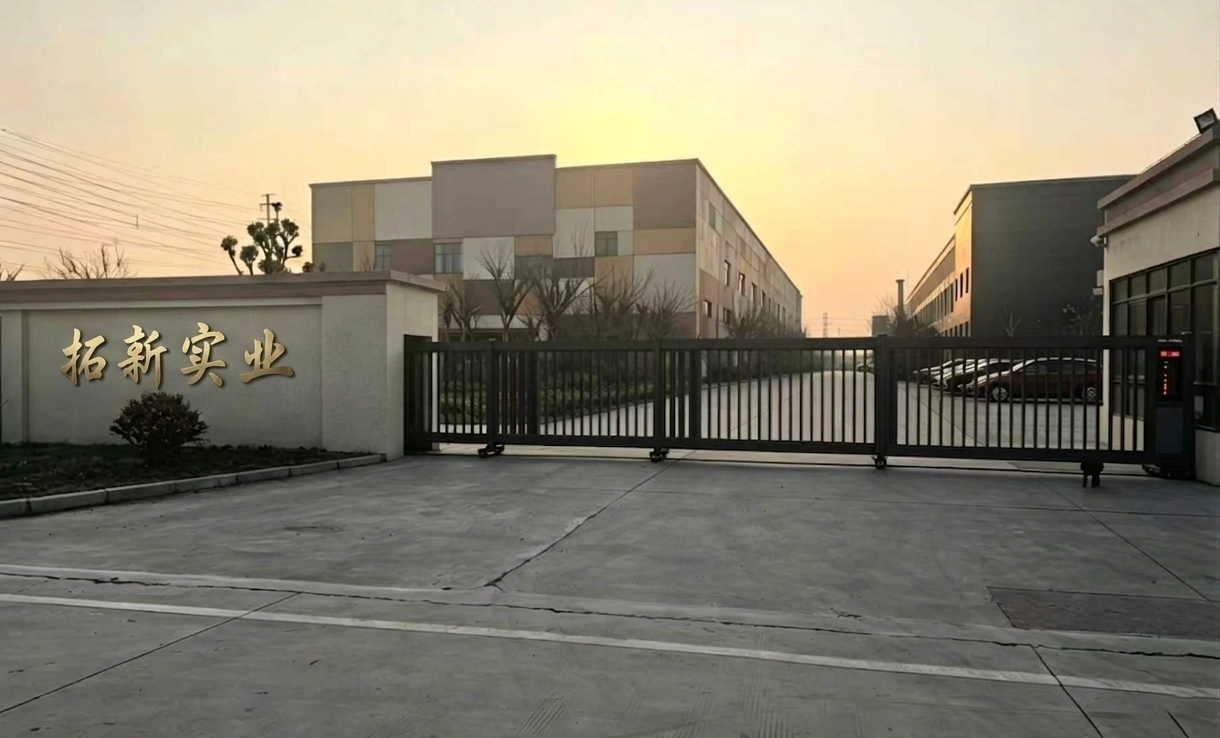
WoodMirra is the export brand of Yunhe Tuoxin Industrial Co., Ltd., a wooden products manufacturer based in Yunhe, Zhejiang — the heart of China's wooden industry. We manufacture wooden mirrors, small wooden home furnishings, children's wooden products, crafts and straw weaving items, and we support both OEM development and ODM customisation from our own workshops.
If you are deciding between the two models, send us your requirement and we will tell you honestly which route fits, what setup would cost, and what MOQ applies. Request a free quotation with your target product, market and quantity, and we will come back with a costed recommendation rather than a catalogue dump.